Finding reliable suppliers begins with wide search and careful filtering.
Supplier discovery works best when different methods are used together. Keyword search remains foundational for uncovering potential manufacturers. Combining long-tail and regional terms often reveals additional candidates. Image search adds another layer of insight. Saving product photos from sites like Etsy or Pinterest and uploading them into Alibaba helps find suppliers that keyword search alone might miss.
AI powered search lets you describe a product in natural language, including materials and features, and surfaces suppliers that fit those specifications.
Filtering improves quality outcomes. Verified Supplier status indicates third party validation and access to media and documents. Trade Assurance or Alibaba Guarantee protects payment and delivery and should always be enabled. Supplier experience of two to three years or more increases the likelihood of consistent performance. Diamond badges often indicate higher volume and stability.
Supplier pages should be reviewed carefully for customization capability, production methods, quality control, willingness to support third party inspections, and any R and D resources. Factories often provide deeper customization, while traders or multi category suppliers can be more effective for complex bundles or multi part products.
How Should I Contact and Negotiate With Suppliers?
Supplier engagement matters.
There are three main contact methods. Messenger chat is suitable for informal questions and early capability checks. Formal inquiry works when specifications and quantities are defined. RFQs should be used only once requirements are fully finalized.
Early conversations should focus first on validating capabilities, customization options, and quality control processes. Price discussions come at a later stage. Referencing potential future order volume signals serious intent and often generates more thoughtful responses.
Request detailed quote breakdowns that include unit pricing, component pricing, packaging, shipping by air or sea, and lead times. Ask for prices at both your initial quantity and at three times that volume to reveal how pricing scales. Competitive quotes can then be used to negotiate better terms.
All supplier responses should be organized into a comparison table so costs, lead times, communication quality, and overall fit can be evaluated side by side.
How Do I Validate Suppliers Through Sampling?
Sampling confirms actual production capability.
Place sample orders with at least three suppliers. Relying on just one sample limits options and negotiating leverage. Sample fees are typical, and many suppliers allow those fees to be credited toward a larger order if they are selected.
Production samples reveal actual material quality, construction, and consistency. Trial or test orders are less common in private label but may be used in specific scenarios.
Sample quality may differ from mass production due to tooling or process adjustments. Buying leading competitor products alongside samples enables direct product comparison and confirms whether your product offers meaningful improvement.
How Should Payments and Fulfillment Be Handled Safely?
Payment method determines the level of protection.
Payments should always be processed through Alibaba or other platform payment options. Direct transfers to suppliers remove platform safeguards. Trade Assurance protects both funds and delivery commitments.
To manage cash flow when inventory arrives months after ordering, Buy Now Pay Later options help bridge financial timing gaps.
For larger orders, consolidated shipping through the platform simplifies customs handling and reduces freight complexity.
How Do I Prepare for Scaling and Supplier Continuity?
Scaling begins before placing large orders.
After sampling, one primary and one secondary supplier should be finalized. This protects against supply interruptions and quality issues.
Reorders and SKU expansion are easier when communication and documentation remain centralized. Managing quotes, specifications, and orders within the platform or integrated tools improves clarity as volume grows.
How Does Data Dive Help in This Sourcing Process?
One specific feature from Data Dive that directly supports supplier outreach is the AI Product Brief — a capability that analyzes competitor listings, including thousands of reviews, and generates a structured brief outlining features, requirements, and product expectations.
This makes your supplier communications clearer and more precise. Instead of providing a vague sketch of what you want, you can send suppliers a brief that reflects real market signals from competitors and customers.
This results in:
• Quotes that reflect accurate product requirements • Fewer misunderstandings during sampling and production • Better alignment between market expectations and supplier capability
By using the AI Product Brief to define materials, functionality, accessories, and packaging preferences before contacting suppliers, you improve the likelihood of receiving reliable and actionable quotes.
What Best Practices Reduce Risk in Private Label Sourcing?
Effective sourcing follows consistent principles.
Search broadly and then filter by relevant criteria. Validate every claim with evidence. Order at least three samples and use direct product comparison. Negotiate all terms. Use platform protections. Maintain backup suppliers. Use AI tools that help clarify product requirements and market context. Consolidate all supplier information clearly for side by side evaluation.
Conclusion
Effective private label sourcing works as a connected system.
Broad search methods uncover numerous options. Strategic filtering identifies suppliers with capabilities. Structured communication confirms supplier understanding. Sample evaluation reveals true quality. Platform payment methods protect capital. Bringing backup suppliers into the mix provides continuity.
Using a specific Data Dive feature such as the AI Product Brief further sharpens sourcing discussions by giving suppliers well defined product requirements rooted in real market analysis.
When these stages connect, sourcing becomes predictable and controlled. Each stage supports the next, reducing risk before capital is committed and setting up suppliers as long term partners rather than chance encounters.
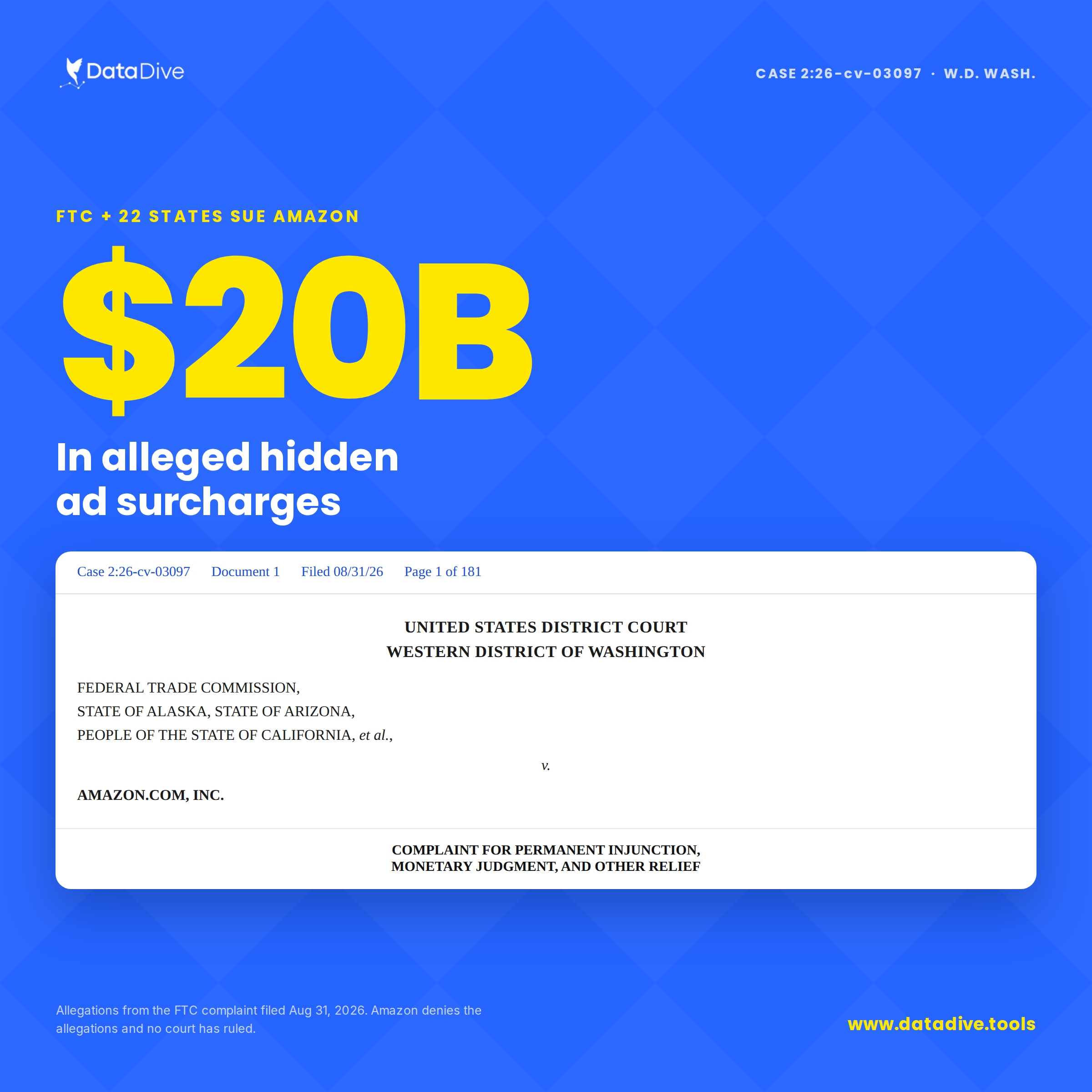
The FTC and 22 states allege Amazon hid surcharges in its advertising auctions for seven years. Amazon denies it. What the complaint says, and what Amazon sellers should do about it.